From Planning to Planting: Designing with Nature
Effective biodiversity planning doesn’t just meet regulations; it also improves outcomes for both people and the planet.
At idverde, we believe that ecology should be considered from day one. Our teams collaborate with developers and local authorities to create resilient and regenerative landscapes that meet ecological, social, aesthetic, and commercial objectives.
This means using native species, avoiding monocultures, incorporating seasonal interest, and ensuring that long-term maintenance aligns with ecological performance, not just visual standards.
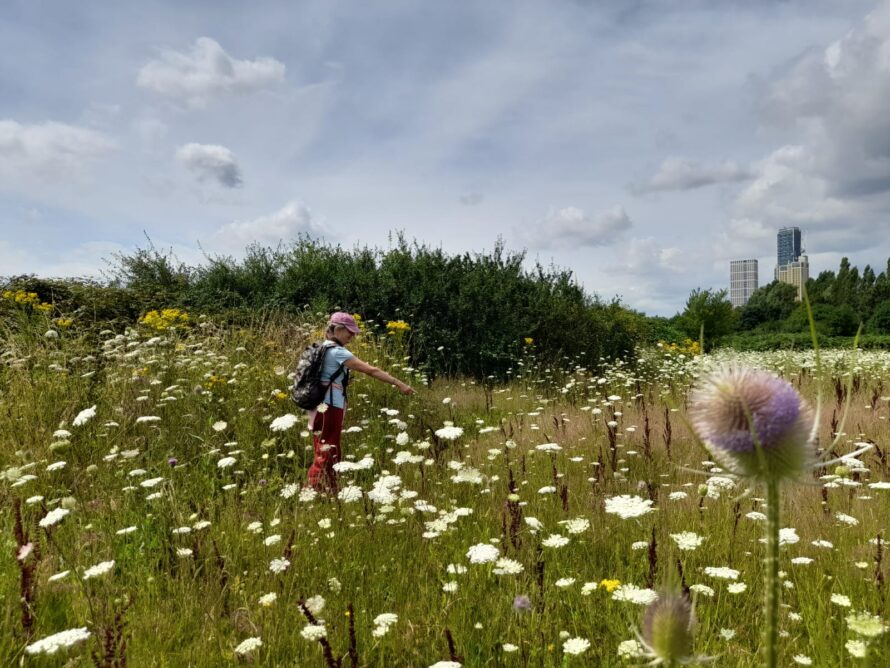
Using native species of trees, shrubs, and grasses helps support local biodiversity and ecosystem resilience. Native flowering trees like rowan and cherry, and flower and berry-producing shrubs such as hawthorn and spindle, planted alongside native wildflower mixes suitable for local soil types, are all particularly beneficial for pollinators and wildlife.
Avoiding monocultures, like ornamental plants, unused turfgrass, or single-species tree plantings, is important where appropriate and necessary. A diverse mix of species that mimics ‘local’ natural ecosystems and provides layered habitat structure is a more sustainable approach.
Seasonal interest refers to designing landscapes that offer both visual and ecological value throughout the year. For wildlife, this means creating continuous food sources for pollinators, birds, and other species. It also supports phenological diversity, allowing different plants to bloom, fruit, or seed at different times.
Top tip: Use a mix of early-flowering native bulbs, summer perennials, and late-season seed-bearing plants to maintain interest and ecological function across the seasons.
For example, at the Bardon II industrial development in Leicestershire, idverde’s enhancement initiative allowed the former arable farm to become a thriving local ecosystem. This case study demonstrates that industrial developments can coexist with conservation.
Working in partnership with RSPB Ecological Adviser Ross Bray, we implemented a Biodiversity Enhancement Plan that included installing underground hibernacula, bee banks, native wildflower banks, a kestrel box, woodland bird boxes for priority species, including redstart and spotted flycatcher and introducing sympathetic mowing regimes to expand the area of species-rich pollinator grassland.
We also managed the areas around the banks of the Sustainable Urban Drainage Systems (SuDS) to ensure a continued viable wetland habitat, created woodland habitats for bats and birds, and repurposed site arisings for compost.
Biodiversity is steadily increasing, with surveys recording species like brown hares and grey wagtails, as well as common spotted orchids, along with sightings of the striking marbled white butterfly, attributed to relaxed mowing practices.
A site such as Bardon II, which has undergone development upheaval, may take a decade to fully show signs of management success; although the signs are there, this is very encouraging. Therefore, expectations versus outcomes must also be embedded in any management planning.
The site now serves as a blueprint for biodiversity-focused grounds maintenance at similar industrial estates.